

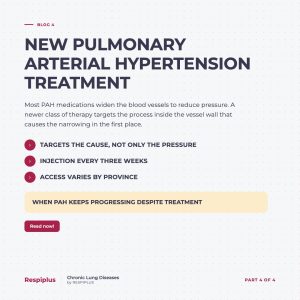
New Pulmonary Arterial Hypertension Treatment Options
When PAH keeps progressing despite treatment, a newer class of therapy works on the cause of the vessel narrowing rather than only its effects. What has changed.
Sometimes the hardest part is not getting a diagnosis. It is figuring out what comes after.
Luc was 49 when he learned he had Alpha-1 antitrypsin deficiency. By then, he had already lived with breathlessness long enough to quietly reorganize his life around it.
He stopped coaching his son’s soccer team because running the sidelines left him gasping. He avoided long walks on cold days. He planned errands carefully, parking close, pacing himself, telling himself this was simply part of getting older.
For years, he had been told he had COPD. The diagnosis made sense on paper. Luc had smoked for close to 20 years, averaging about a pack a day in his younger adulthood. He quit in his early forties, well before his breathing began to noticeably decline. Like many people, he assumed the explanation was simple. Smoking had caught up with him.
Inhalers were prescribed. Some helped a little. Others did not. Chest infections seemed to hit harder than expected, and recovery took longer each time.
What unsettled him was not the diagnosis. It was the speed. His lungs seemed to be changing faster than his smoking history alone could explain.
When Luc was finally referred to a respirologist, the conversation slowed down. His lung function tests showed obstruction, but the severity appeared out of proportion to both his age and the fact that he had stopped smoking years earlier. Imaging revealed emphysema that seemed advanced for someone who had removed the main exposure long ago.
A blood test showed that his serum alpha-1 antitrypsin level was ordered. The result came back low.
For Luc, the Alpha-1 diagnosis brought relief first. There was an explanation that did not erase his smoking history, but it reframed it. Smoking had not caused Alpha-1. It had accelerated damage in lungs that were already vulnerable. Then came the next question. What now.
Alpha-1 is not just a name for why lung damage happened. It is a genetic condition that changes how future damage must be approached.
Once Alpha-1 is identified, the focus shifts. Care is no longer only about managing symptoms. It becomes about preserving lung tissue for as long as possible.
Alpha-1 related lung disease is progressive, but progression is not fixed. Exacerbations, infections, and ongoing inflammation accelerate damage. Preventing those events becomes central, not optional. This is where timing matters more than many people realize. Waiting does not mean standing still. It often means losing lung function quietly and gradually.
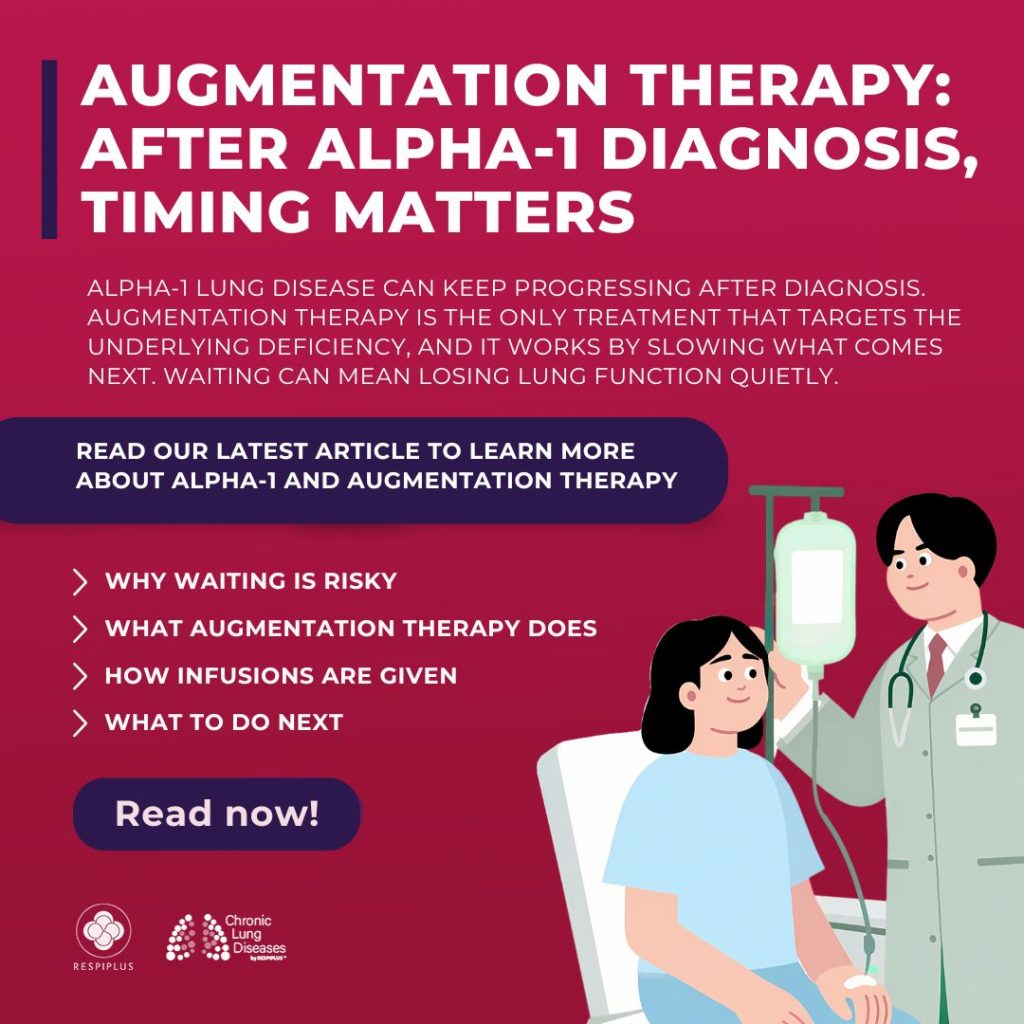
Alpha-1 has only one specific treatment that targets the disease itself. Augmentation therapy.
Augmentation therapy works by increasing the level of protective alpha-1 protein in the blood. Its purpose is not to reverse lung damage or restore lost lung function. That is not possible. Its goal is to slow further destruction of lung tissue by restoring some of the protection the body is missing.
All other treatments commonly used in people with Alpha-1 such as inhalers, pulmonary rehabilitation, vaccines, and infection management are treatments for COPD. They help manage symptoms and reduce exacerbations, but they do not treat Alpha-1 itself.
This distinction matters. Alpha-1 is not simply a subtype of COPD. It is a genetic condition that causes lung damage, and augmentation therapy is the only intervention designed to address that underlying deficiency.
In Canada, people with severe Alpha-1 who meet clinical criteria can access augmentation therapy at no cost. Access requires confirmation of diagnosis, specialist involvement, and careful assessment. It is not automatic, and it is not appropriate for everyone with Alpha-1.

Augmentation therapy is given as an intravenous infusion of alpha-1 protein, usually once a week. The infusion replaces part of the protective protein the body does not make or release properly. Treatment is ongoing rather than time-limited, because the underlying genetic deficiency does not change. Over time, many people receive infusions in outpatient clinics, and some transition to home-based infusions with appropriate support. The logistics vary, but the intent remains the same. Maintain protective protein levels in the blood to help slow further lung damage.
What it offers is time. Time with more stable lung function. Time with fewer losses. Time to protect what remains.
Living with Alpha-1 means the lungs have less margin for error. Inflammation, infections, and environmental exposures cause damage more easily and recovery takes longer.
This is why healthy lifestyle choices matter, even alongside treatment. Avoiding smoking and second-hand smoke is essential. So is reducing exposure to dust, fumes, and air pollution whenever possible. Vaccinations, regular physical activity, good nutrition, and early treatment of respiratory infections all play a role in protecting lung tissue that cannot be replaced.
These steps do not treat Alpha-1 itself. Augmentation therapy is the only treatment that addresses the underlying deficiency. But lifestyle and exposure control help reduce the triggers that accelerate lung damage.
For people with Alpha-1, these choices are not about perfection. They are about preserving what remains.
Delays in treatment do not usually come from indifference. They come from uncertainty.
Alpha-1 remains underrecognized. Smoking history can overshadow other explanations, especially when COPD appears to fit. Clinicians may want to be certain before escalating care. Patients often need time to absorb the diagnosis itself. Referral pathways take time. Paperwork takes time. But, Alpha-1 lung disease does not pause while systems catch up.
Luc was surprised to learn how long he had likely been living with the condition without knowing it. By the time treatment conversations began, his lung function had already declined to a point that could not be reversed.
Treatment decisions sit inside real lives. Work schedules. Family responsibilities. Emotional readiness. Concerns about stigma, confidentiality, and what genetic information might mean for the future.
Luc worried about being seen as responsible for his illness. He worried that Alpha-1 would be dismissed as “just smoking related COPD.” He worried about being defined by a diagnosis he had only just learned to name.
These concerns needed space. They needed clinicians who did not rush but also did not minimize the stakes.
Alpha-1 reminds us that diagnosis is not the finish line. It is the starting point for a different kind of care.
Testing identifies risk. Early diagnosis opens options. Timely referral creates room to act before lung damage accelerates beyond control.
For clinicians, the implication is straightforward. If a person with COPD has a low serum alpha-1 level, confirm the diagnosis and refer early to respirology. Augmentation therapy is time sensitive. It cannot recover lost lung tissue, but it can help slow further damage when started before the disease advances too far. Delays do not preserve neutrality. They allow progression.
Luc often says the hardest part was not the infusion. It was realizing how long he had lived with Alpha-1 without knowing there was another option.
Alpha-1 has only one treatment that targets the disease itself, and it works by slowing what comes next. It cannot restore lost lung tissue. That makes timing everything.
Diagnosis alone does not protect lungs. Awareness alone does not preserve function. Action does. The recommendation is clear. Test early. Refer early. Discuss augmentation therapy before lung damage advances beyond reach.
In Alpha-1, earlier action does not change the past. It protects what still remains.
Alpha-1 is an inherited condition where the body has too little functional alpha-1 antitrypsin, a protective protein made mainly in the liver. This protein helps protect lung tissue from inflammation-related damage. When levels are low, lung damage can build slowly over years and cause COPD. Some people also develop liver problems because abnormal protein can build up in the liver.
Alpha-1 antitrypsin acts like a protective shield for the lungs. During infections, smoke exposure, or irritation, inflammation enzymes can damage healthy lung tissue. Alpha-1 helps keep that damage in check. Without enough functional protein, the lungs are more vulnerable to cumulative injury, which can lead to early emphysema or COPD-like changes. In some forms of Alpha-1, protein can also stress the liver.
Alpha-1 is one of the most common inherited conditions linked to COPD, but it is still underdiagnosed. It is missed because symptoms overlap with asthma and COPD, and smoking history can distract from genetic causes. Many people are diagnosed only after years of symptoms or repeated exacerbations. A simple blood serum level test can diagnose Alpha-1 earlier and change the care plan.
Yes. Smoking does not cause Alpha-1, but it can accelerate lung damage in people who have it, even with a relatively small smoking history. Some people with Alpha-1 have few or no symptoms for years, especially if they avoid smoking and reduce exposures. That is why family testing and early detection can matter: it supports prevention before major lung function is lost.
No. Alpha-1 can affect the liver because abnormal alpha-1 protein may build up in liver cells instead of being released into the bloodstream. Some people develop elevated liver enzymes, fibrosis, cirrhosis, or other liver complications. Not everyone with Alpha-1 will have liver disease, and severity varies by genetic type and other factors. Clinicians may monitor liver health as part of overall care.
Start with the simplest goal: do not miss a genetic contributor to lung damage. Alpha-1 testing is usually a serum blood level first, followed by confirmatory testing if low. Key context includes age at diagnosis, smoking or exposure history, rate of progression, and family history of lung or liver disease. These details affect how strongly results change the plan.
Many professional associations, such as the Canadian Thoracic Society, encourage testing in all people with COPD because the clinical “look” can be misleading. It is especially important in early onset COPD (often under 45 to 50), never-smokers, disproportionate emphysema, frequent exacerbations, or faster-than-expected decline. Testing once can prevent years of treating symptoms without addressing the driver.
Usually both, in sequence. The first step is commonly a serum alpha-1 antitrypsin level, a standard blood test. If the level is low (or suspicious), confirmatory testing may include phenotype or genotype testing, which clarifies the specific inherited variants. The practical point: the blood test is a simple screen, genetics helps confirm and guide family discussions.
This depends on local pathways and the severity of symptoms, but the sequence above keeps care organized and timely.
A big one is assuming smoking history rules it out. Another is skipping testing because the patient is “too old” or “does not look genetic.” Alpha-1 can present across a wide range, and environmental exposures can accelerate decline. A third mistake is stopping after a single borderline result without confirmatory testing when clinical suspicion is high.
Often, yes, but the approach should be careful and consent-based. Because Alpha-1 is inherited, first-degree relatives may want testing to understand risk and make earlier health choices. What it depends on: family planning concerns, privacy, insurance or employment worries, and emotional readiness. The best conversations are clear, non-alarmist, and centered on choice.
Not usually. A primary care clinician can often order the initial serum test as part of a COPD workup. Specialist involvement becomes most useful when levels are low, confirmatory testing is needed, symptoms are progressing, or advanced management decisions are on the table. The fastest route is often: screen in primary care, confirm and plan with respirology.
Augmentation therapy is an IV treatment that increases alpha-1 protein levels in the blood to restore some protection to lung tissue. It is considered the only disease-specific therapy for Alpha-1 related lung disease in people with severe deficiency. It is not a cure and it cannot rebuild destroyed lung tissue, but evidence supports that it can slow lung tissue loss.
As early as possible once Alpha-1 antitrypsin deficiency and Alpha-1–related lung disease are confirmed. Timing matters because progression can continue quietly, especially with infections and exacerbations. Starting conversations early helps prevent “system delays” (referrals, paperwork, infusion planning) from becoming clinical delays. The right timing still depends on disease severity, lung function, and specialist assessment.
It does not reverse COPD or restore lost lung tissue. The main goal is slowing further destruction. People may feel more stable over time because fewer losses accumulate, but expectations should be realistic: the purpose is preservation, not recovery. Symptom improvement varies and often depends on COPD therapies, rehab, smoking cessation, and infection prevention working alongside it.
It is typically given as an intravenous infusion, commonly once weekly, and is usually long-term because the underlying genetic deficiency does not change. Some people receive infusions in outpatient clinics, and some may transition to home infusions with appropriate support depending on local programs and individual suitability.
The details depend on severity, comorbidities, and local pathways. This content is for educational purposes and does not replace medical advice.
Access is organized through provincial and territorial systems and, for eligible patients, products may be available via Canadian Blood Services formulary pathways. Eligibility generally requires confirmed severe Alpha-1, specialist involvement, and clinical assessment. Availability can vary by jurisdiction. The practical next step is referral to respirology to confirm diagnosis and navigate local access.
Delays often come from uncertainty (waiting for confirmatory tests), slow referral pathways, and logistics around infusion programs. Patients may also need time to process genetic information and stigma. The fix is not rushing, it is sequencing: confirm promptly, refer early, and start planning while education and decisions are happening in parallel.
Augmentation targets the underlying deficiency, but day-to-day lung protection still relies on proven COPD supports: inhalers when indicated, pulmonary rehabilitation, reducing exposure to cigarette smoke and other irritants, vaccines, physical activity, nutrition, and early treatment of infections. These do not “treat Alpha-1” directly, but they reduce exacerbations and inflammation that accelerate damage.
Jean Bourbeau, MD, MSc, FRCPC
Angela Diano, Executive Director, AlphaNet Canada
Katrina Metz, RT
Maria Sedeno, BEng, MM, GCSRT (Harvard)
RESPIPLUS™ received support from Takeda to develop this series specifically tailored to Alpha-1 antitrypsin deficiency (AATD).
When PAH keeps progressing despite treatment, a newer class of therapy works on the cause of the vessel narrowing rather than only its effects. What has changed.
There is no excerpt because this is a protected post.
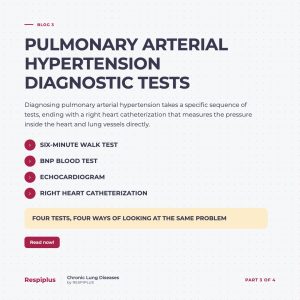
The six-minute walk test, the BNP blood test, the echocardiogram and the right heart catheterization. What each test measures and what to expect at a PH centre.