


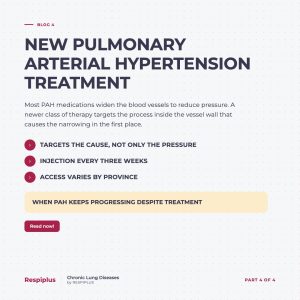
New Pulmonary Arterial Hypertension Treatment Options
When PAH keeps progressing despite treatment, a newer class of therapy works on the cause of the vessel narrowing rather than only its effects. What has changed.
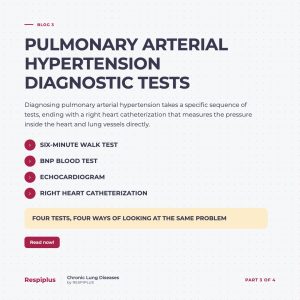
Pulmonary Arterial Hypertension Diagnostic Tests: What to Expect at a PH Centre
The six-minute walk test, the BNP blood test, the echocardiogram and the right heart catheterization. What each test measures and what to expect at a PH centre.
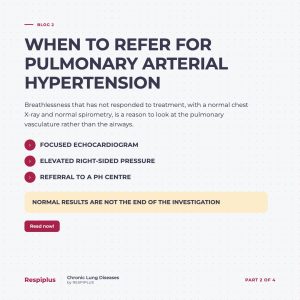
When to Refer a Patient for Pulmonary Hypertension
Breathless patient, normal X-ray, normal spirometry, no response to treatment. Why that combination points at the right side of the heart, and when to refer. (154 caracteres)
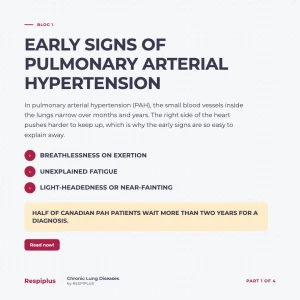
Early Signs of Pulmonary Arterial Hypertension
Breathlessness on stairs, fatigue, near-fainting. Why the early signs of pulmonary arterial hypertension are so easy to miss, told from inside the right ventricle.

Lung Cancer and COPD: Understanding the Connection
COPD raises lung cancer risk independently of smoking history. A 2024 meta-analysis found 1.76 times higher risk. The red flags and who to screen.

Lung Cancer Symptoms, Diagnosis and Screening in Canada
Nearly half of lung cancers in Canada are diagnosed late. The symptoms to watch for, the four steps of diagnosis, and who qualifies for screening.

Types of Lung Cancer: NSCLC, SCLC and Subtypes
Non-small cell lung cancer makes up 80-85% of cases in Canada. The two main types, their subtypes, and the biomarkers that decide treatment.

Lorlatinib in Practice: A Two-Year Case in ALK+ NSCLC
Weight gain, hyperlipidemia, edema and mild CNS changes over two years, with disease control maintained. Identify early, escalate proportionally, communicate clearly.

When to Refer: Multidisciplinary Care for Patients on Lorlatinib
Clear referral thresholds for neurology, psychiatry, cardiology, radiation oncology and tertiary centres in ALK+ NSCLC, while maintaining oncologic oversight.
Clinical Tools for Monitoring and Follow-Up
AE checklists, lipid monitoring, cognitive screening and symptom tracking. Practical tools that make follow-up systematic rather than reactive.