

The First Time Anyone Measured Me
A story of PAH testing, told from the inside. A walk down a corridor, a protein in the blood, and a thin tube that finally measured the pressure directly.
- Diagnosing PAH follows a specific sequence: an echocardiogram with careful attention to the right side of the heart, then referral to a pulmonary hypertension centre for right heart catheterization.
- The six-minute walk test measures what the right ventricle can deliver when demand rises. Raymond walked 340 metres against an expected distance closer to 550 for his age and size.
- BNP is a protein the right ventricle releases when its walls have been under pressure for too long. It rises steadily as the workload builds, and any standard blood test can detect it.
- Right heart catheterization is the definitive test. It measures pressure directly inside the chamber and the pulmonary artery rather than estimating it from outside the chest.
- Results from all the tests are combined into a risk score that tells the care team how advanced the disease is and how urgently treatment needs to begin.
Still Working, Still Waiting
I am the right ventricle, the lower right chamber of the heart. My job is to take blood returning from the body and push it through the vessels inside the lungs, where it picks up oxygen before the left side of the heart sends it everywhere else. Short trip, low pressure, no drama. Under normal conditions I barely have to try. The key word is normal. In pulmonary arterial hypertension, the vessels I push blood through have been gradually narrowing for years, and the pressure I work against has been rising with every passing month. I push harder to keep up. I build up my thin muscular wall to stay functional. I keep going because stopping is not something I know how to do.
Raymond is 48 years old and lives in a First Nations community, a long drive from the nearest city. He has been getting winded doing things that did not used to wind him, splitting wood, walking to the community centre, climbing the steps to the band office. The nurse practitioner at the local health clinic suspected something beyond asthma more than a year ago and referred him to a cardiologist in the nearest city. Getting there meant coordinating transportation and taking time away from work. The cardiologist ordered a heart ultrasound. That test, finally done with enough attention to the right side of the heart, found what had been building inside my chamber for two years. The pressure in the lung vessels was significantly elevated. I was enlarged. The cardiologist referred Raymond to the pulmonary hypertension centre for the tests that would confirm the diagnosis and determine what to do next.
The nurse practitioner at the local health clinic suspects something beyond asthma and refers Raymond to a cardiologist in the nearest city.
Done with enough attention to the right side of the heart. Pressure in the lung vessels significantly elevated. The chamber enlarged.
The cardiologist refers Raymond to a pulmonary hypertension centre for the tests that will confirm the diagnosis.
Six-minute walk test, BNP blood test, and right heart catheterization. Diagnosis confirmed, risk score assigned, treatment planning begins.
Raymond left home very early on the day of his appointments at the PH centre. I experience duration, the long stretch of time that passes while a body sits still and maintains itself, my output steady and unremarkable. By the time Raymond checked in at the centre, a long time had passed since the last familiar place. What happened next was different from anything that had been done before. Every test in the sequence was specifically designed to confirm what the heart ultrasound had already suggested, and to build the full picture needed to start treatment.
The Six-Minute Walk Test
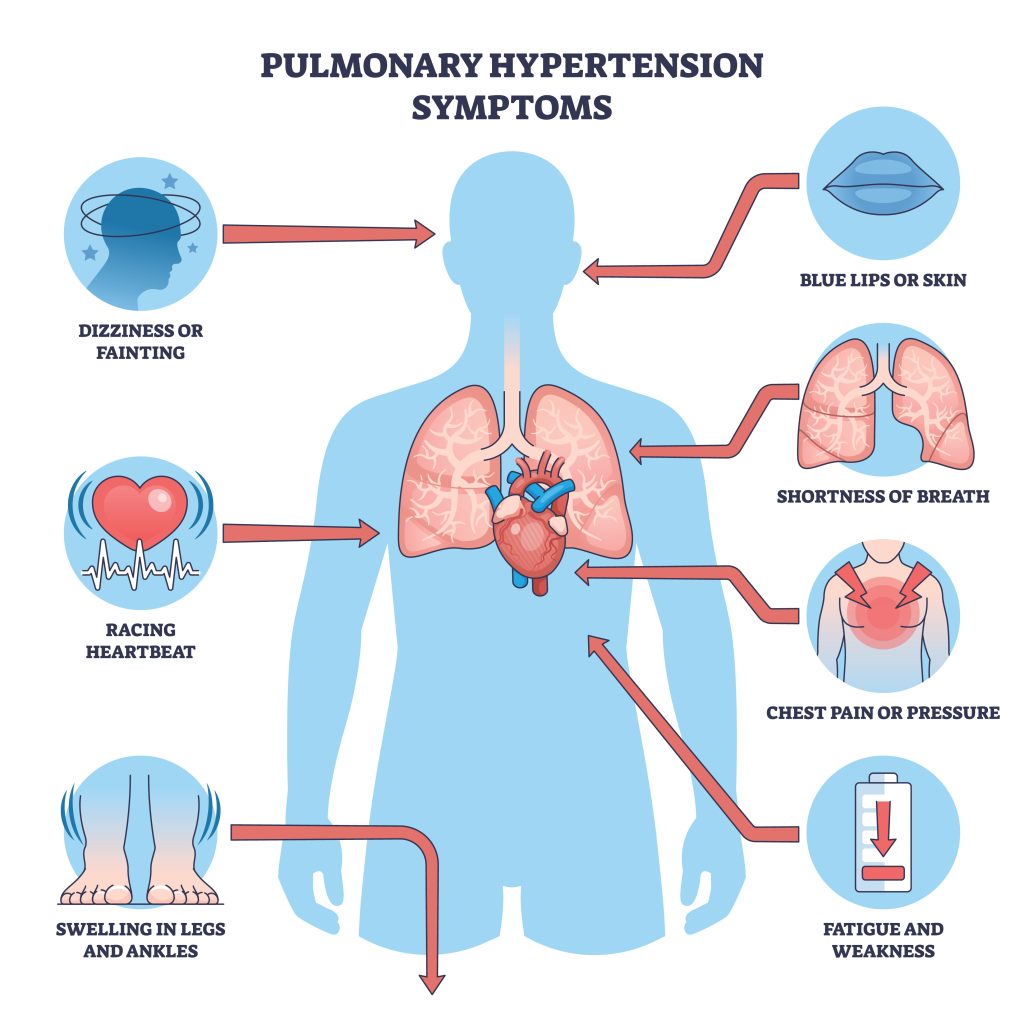
The first thing they asked Raymond to do was walk. Not to a destination, not at his own pace for his own reasons, but back and forth along a measured corridor for six minutes while a clinician tracked the distance and watched his oxygen levels. This sounds simple. From where I sit, it is one of the most revealing things the outside world can do to understand my situation.
Think of it this way. In a healthy person, when the body starts moving faster and the muscles need more oxygen, the blood vessels in the lungs open up slightly to let more blood through without much extra effort from me. The system adjusts. In Raymond’s lungs, those vessels have been narrowing for years and they no longer open up the way they should. When he walks quickly, the demand on me goes up but the resistance does not ease. I push harder against the same narrowed channels. His body asks for more than I can reliably deliver. Raymond feels this as breathlessness that arrives sooner than it should, a heaviness in the legs, an urge to slow down.
Raymond walked 340 metres in six minutes. For a man his age and size, the expected distance is closer to 550 metres. That gap of 210 metres is not about fitness or effort. It is a measure of what I can deliver when the demand goes up and the vessels will not give. The number went into his file. It was the first time my limitation had been expressed as something concrete enough for the outside world to act on.
The Blood Test
There is a protein called BNP that I release into the bloodstream when my walls have been under too much pressure for too long. Think of it as a slow leak of information into the blood, a chemical trace of the strain I have been carrying. It does not spike dramatically. It rises steadily as the workload builds, and it stays elevated as long as the pressure does not ease. Any standard blood test can detect it. At the PH centre, it was one of the first things they checked.
Raymond’s BNP was significantly above the normal range, consistent with what the walk test had already shown and what the heart ultrasound had flagged. Three different tests, three different ways of looking at the same problem, all pointing in the same direction. The next step was the one that would remove any remaining doubt.
The Echocardiogram and What the Referral Was Based On
It is worth pausing here to explain the role the heart ultrasound played before Raymond ever arrived at the PH centre, because it was the test that changed the direction of everything.
Raymond had been seen by the local nurse practitioner, treated for possible asthma, and referred to a cardiologist when the standard treatments did not help. The cardiologist ordered a heart ultrasound as part of the workup. The sonographer, the technician who operates the ultrasound machine, took the time to get a clear view of the right side of the heart and measure the pressure in the lung vessels carefully. The result was elevated well above what is considered normal. My chamber was enlarged. The cardiologist had enough information to know this was beyond general cardiology and referred Raymond to the pulmonary hypertension centre for the definitive test.
This is how the referral pathway is supposed to work. A heart ultrasound that includes careful right heart measurement catches an elevated pressure reading. That finding triggers a referral to one of the 17 adult pulmonary hypertension centres in Canada. The PH centre confirms the diagnosis with a right heart catheterization. The path from suspicion to confirmed diagnosis is short when each step happens in the right order. Raymond’s path took longer than it should have, not because the tests were unavailable, but because getting to them from where he lives required time and coordination that patients in larger cities do not face in the same way.
- Six-minute walk test: what the right ventricle can deliver when demand goes up.
- BNP blood test: a chemical trace of how long the walls have been under strain.
- Echocardiogram: an estimate of lung vessel pressure from outside the chest.
- Right heart catheterization: direct measurement from inside the chamber. The definitive test.
The Right Heart Catheterization
Everything the outside world had done to understand my situation up to this point had been done from a distance. The walk test measured what I could deliver under stress. The blood test picked up a chemical signal I had been releasing for months. The heart ultrasound estimated the pressure in the lung vessels from outside the chest using sound waves. All of it was useful, but all of it was indirect. Like trying to understand what is happening inside a room by listening at the door.
The right heart catheterization opens the door. A thin, flexible tube is passed through a vein in the neck or groin, guided through the body’s venous system, through the valve on my right side, and into my chamber. For the first time in Raymond’s life, and in mine, something from the outside world was physically inside me. Not estimating the pressure from a distance. Sitting in the same space I occupy, measuring what I experience directly, in real time.
The procedure is not painful for Raymond. He is awake, his skin frozen with local anesthesia, lying on a table while a team uses imaging equipment to guide the tube to the right place. From Raymond’s perspective it is quiet and clinical and a little unfamiliar. From my perspective it is the most thorough examination I have ever had. The tube measures the pressure inside my chamber with each beat. It then moves forward into the pulmonary artery, the main vessel carrying blood from me into the lungs, and records the pressure there directly. It measures how much blood I am moving per minute. It captures the resistance in the lung vessels, the precise number that explains exactly how hard I have been working and why.
The numbers were clear. The average pressure in the pulmonary artery was well above the threshold used to diagnose pulmonary arterial hypertension. The resistance in the lung vessels was elevated well beyond the normal range. The amount of blood I was moving per minute was lower than a resting body of Raymond’s size should need. These are not estimates or approximations. They are direct readings taken from inside the system I power, by an instrument that was physically present in my chamber. The diagnosis was confirmed.
The gap between what I had been experiencing and what anyone outside knew had finally closed.
I have known these pressures from the inside for two years. Every beat against a narrowing vessel, every extra effort to keep the blood moving, every small adaptation my muscle made to stay functional under conditions it was not built for. None of that was new information to me. What was new was that the outside world now had the same information, expressed in numbers precise enough to act on.
The tube was withdrawn. Raymond rested for a short time. The team reviewed the results and began talking about what came next. The drive home was long. I pushed blood through the same narrowed vessels on the way back that I had pushed it through on the way there, the same effort, the same resistance, the same rhythm that had been my daily reality for two years. Nothing about the biology had changed. But the picture outside the chest was finally complete.
What the Numbers Mean Together
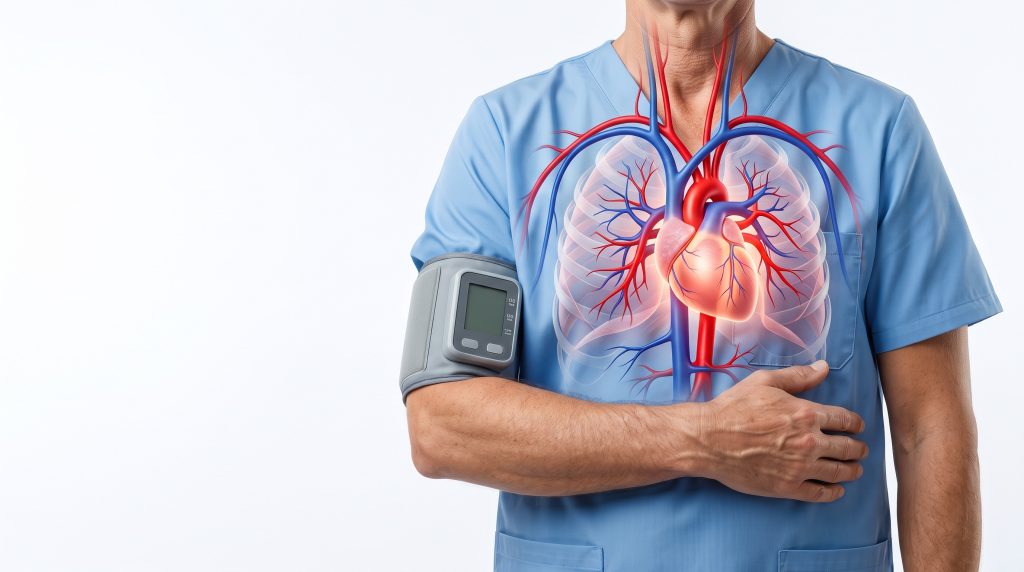
The results from all the tests, the walk distance, the BNP level, the heart ultrasound findings, and the catheterization measurements, were combined into a risk score. The scoring system looks at these things together to build a picture of how advanced the disease is and how urgently treatment needs to start. Think of it as a way of translating what I have been experiencing physically into a language the care team can use to make decisions. Not perfect, but precise enough to determine the next steps and how quickly they need to happen.
Raymond’s results placed him in a category that told his care team the situation was serious and that treatment needed to begin without delay. Two years of physical experience, reduced to a risk category on a page. From where I sit that compression feels incomplete. It does not capture what two years of rising pressure actually feels like from the inside. But it is the most completely the outside world has ever understood my situation, and it is enough to change what happens next.
Clarity, But Not Yet Relief
Raymond left the pulmonary hypertension centre with a confirmed diagnosis, a risk assessment, and a follow-up appointment. The treatment plan was being assembled. There would be more long trips, more coordination, more time away from home. The logistical weight of managing a serious illness from a remote community does not disappear because the diagnosis has been confirmed. In some ways it becomes more concrete, because now there are specific treatments to access, specific monitoring to schedule, and specific warning signs to watch for.
Diagnosis is not treatment. Knowing the exact dimensions of a problem is not the same as solving it.
I am still pushing against the same pressure I have always pushed against. The catheterization measured it precisely but did not reduce it. The blood test described my strain but did not ease it. The walk test documented my limit but did not extend it. What a confirmed diagnosis gives is something more important than reassurance. It gives a complete and accurate picture, and from a complete and accurate picture, the right treatment can finally begin.
The pressure is still there. I keep working because that is the only thing I know how to do. What is different now is that the people outside this chest finally have the full picture. The next time Raymond makes that drive, it will be for something that can actually change what I am experiencing, not just measure it.
What to Ask About
Diagnosing pulmonary arterial hypertension requires a specific sequence of tests. A heart ultrasound with careful attention to the right side of the heart is the right first step when PAH is suspected.
If the pressure in the lung vessels appears elevated, a referral to one of Canada’s 17 adult pulmonary hypertension centres for a right heart catheterization is needed to confirm the diagnosis.
In Canada, reaching a PH centre can mean significant travel for patients in remote and rural communities. Earlier referral means a shorter path from first symptoms to confirmed diagnosis, and earlier diagnosis leads to better outcomes.
For more information or to find a PH centre near you, visit phacanada.ca.
Frequently Asked Questions
What tests are used to diagnose pulmonary arterial hypertension?
A six-minute walk test, a BNP blood test, an echocardiogram and a right heart catheterization. The first three build the picture and point in the same direction. The catheterization confirms the diagnosis.
What is a six-minute walk test and what does it show?
The patient walks back and forth along a measured corridor for six minutes while a clinician tracks the distance and watches oxygen levels. In PAH the vessels in the lungs no longer open up when demand rises, so the distance falls short of what would be expected for the person’s age and size.
What does a BNP blood test show in pulmonary arterial hypertension?
BNP is a protein the right ventricle releases into the bloodstream when its walls have been under too much pressure for too long. It does not spike dramatically. It rises steadily as the workload builds and stays elevated as long as the pressure does not ease.
What happens during a right heart catheterization?
A thin flexible tube is passed through a vein in the neck or groin, guided through the venous system into the right side of the heart. The patient is awake with local anesthesia. The tube measures pressure inside the chamber and in the pulmonary artery directly, along with how much blood is moving per minute and the resistance in the lung vessels.
Why is an echocardiogram done before the catheterization?
The echocardiogram estimates the pressure in the lung vessels from outside the chest using sound waves. When that estimate is elevated, it is the finding that triggers the referral to a pulmonary hypertension centre, where the catheterization confirms the diagnosis directly.
- Part 1I Have Been Working AloneThe early signs, told from inside the right ventricle
- Part 2Your Patient Is Still WaitingWhen to suspect PAH and when to refer
- Part 3The First Time Anyone Measured MeThe tests that confirm the diagnosis
- Part 4The Road Begins to ChangeWhat newer treatment changes, and what it does not
New to this condition? Start with the pulmonary hypertension hub for an overview of the disease, its types and how it is managed.
Keep listening
The eXpand Podcast · Season 6
A full season on pulmonary arterial hypertension, with Canadian specialists.
Raymond is a composite patient created for educational purposes and does not represent a specific individual. This content is intended for education and does not replace clinical judgement or individualized medical advice.
Free report
Pulmonary Arterial Hypertension in Canada
Closing the Gaps. Where Canadian PAH care stands and what has to change.
Read the report