

Your Patient Is Still Waiting
A direct address to the clinician holding the referral decision. Eighteen months of appropriate care, normal tests, and a right ventricle that has been compensating the whole time.
- Half of Canadian patients with pulmonary arterial hypertension wait more than two years from the start of symptoms to a confirmed diagnosis. Only about one in four is diagnosed within the first year.
- A normal chest X-ray and a normal breathing test do not rule out PAH. In early disease the lungs and airways are usually structurally intact, and the problem sits inside the blood vessels connecting the heart and the lungs.
- Canada has no standardized PAH referral pathway. Whether a patient reaches a pulmonary hypertension centre depends largely on whether their physician has PAH on their radar.
- The chain from suspicion to diagnosis is three steps: a focused echocardiogram, an elevated finding, and a referral for right heart catheterization.
- A referral to a PH centre is a consultation, not a handoff. Once treatment is established, ongoing management is typically shared with the referring physician.
She Is in Your Waiting Room Again
You have seen her three times in the past eighteen months. She is 52, a nurse herself, which means she waited longer than most people would before booking the first appointment. She knows how busy clinics are. She knows how to talk herself out of her own symptoms. When she finally came in, she described breathlessness on exertion, nothing dramatic, just a gradual awareness that activity she used to manage without thinking now costs her something. Her chest X-ray was normal. Her breathing test was normal. You treated her for possible asthma. It did not help.
She came back. You referred her to a cardiologist. The cardiologist examined the left side of her heart, found nothing alarming, and discharged her back to your care with a note that said her cardiac function appeared preserved. She was reassured. She went back to work. The breathlessness did not go away. She is in your waiting room again today, and neither of you has a better explanation than you did eighteen months ago.
This is not a story about a mistake. It is a story about a disease that is genuinely difficult to find.

What Has Been Happening While the System Worked Through Its Steps
While she waited for the first appointment, while the chest X-ray was being read, while the inhaler was being tried and failing, while the cardiology referral was being processed and the echocardiogram was being reported and the discharge letter was being written, the right side of her heart was compensating for a problem nobody had named yet. The small blood vessels inside her lungs have been narrowing for years. The pressure her right ventricle pushes against has been rising. To keep up, the muscle wall of that chamber has been thickening. The chamber itself has been slowly enlarging. These changes accumulate over time, and the earlier treatment begins, the better the response tends to be.
Breathlessness on exertion, gradual rather than dramatic. Chest X-ray normal. Breathing test normal. Treated for possible asthma.
No improvement. She comes back.
The left side of the heart is examined. Cardiac function appears preserved. She is discharged back with reassurance.
Still breathless. Still no better explanation than eighteen months ago. She is in the waiting room again.
The 2021 PHA Canada Community Survey found that half of Canadian patients with pulmonary arterial hypertension waited more than two years from the start of their symptoms to a confirmed diagnosis. Only about one in four was diagnosed within the first year. The French national PAH registry showed that when clear referral pathways are in place, the median time to diagnosis drops to roughly one year. That difference reflects not a gap in clinical skill but a gap in where suspicion is directed and how quickly it translates into the right investigation.
Her right ventricle has been doing this work alone. It does not know what is happening outside her chest. It only knows the pressure it wakes up to every morning, and that the pressure keeps rising.
Why Pulmonary Arterial Hypertension Is Easy to Overlook
There is no standardized referral pathway for pulmonary arterial hypertension in Canada. Whether a patient reaches a pulmonary hypertension centre depends largely on whether their physician has PAH on their radar and a connection to a specialist who manages it. A respirologist focused on airways moves on when the breathing test is normal. A cardiologist focused on the left heart moves on when the left ventricular ejection fraction is preserved. Without a specific index of suspicion pointed at the pulmonary vasculature, a patient with early PAH can receive entirely appropriate care for the conditions being considered, and still not get closer to the right diagnosis.
Geography adds another layer of complexity. Canada has approximately 18 adult pulmonary hypertension centres, all located in major academic hospitals in larger cities. For patients in smaller communities, getting an echocardiogram and ultimately a referral to the nearest PH centre may mean significant travel, time off work, and coordination across multiple care settings. These are genuine logistical considerations, and they raise the practical threshold for making the referral when the diagnosis is still uncertain. What the data shows, though, is that earlier referral consistently leads to better outcomes, even when the travel involved is substantial.
The patients most likely to go undiagnosed for the longest time are women between 30 and 60, active and otherwise healthy, whose symptoms are easy to attribute to the demands of their lives. Data from the REVEAL registry found that younger women were the group most frequently told their symptoms were caused by asthma or anxiety before anyone investigated the pulmonary vasculature. They look well enough that urgency is not obvious. They are capable enough that they keep functioning despite a disease that is advancing underneath.
The One Question That Changes the Direction
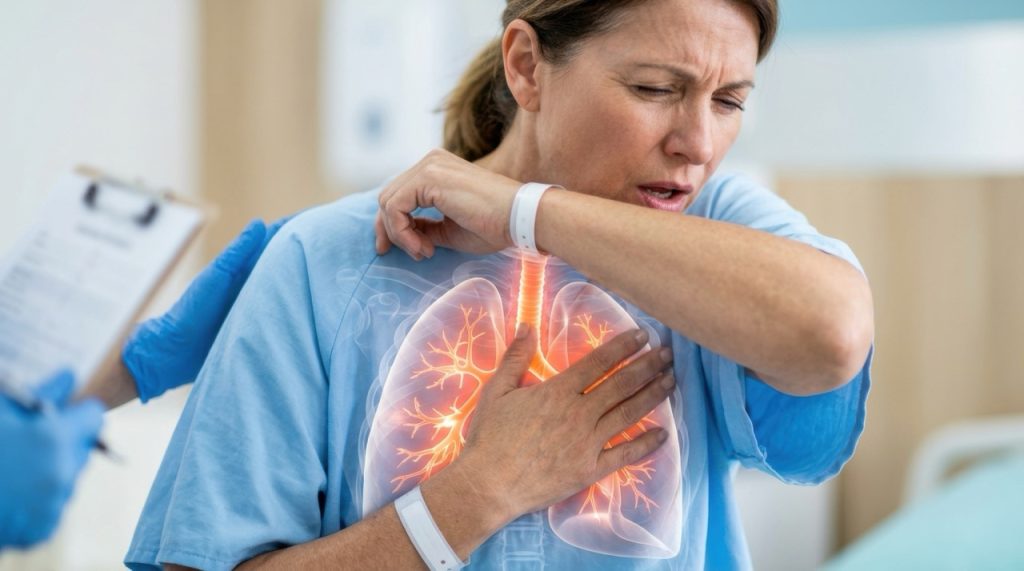
When a patient presents with breathlessness on exertion that has not responded to standard treatment, and the chest X-ray and breathing test have both come back normal or near-normal, that combination points somewhere specific. In pulmonary arterial hypertension, the lungs and airways are usually structurally intact. The problem is inside the blood vessels connecting the heart and the lungs, and those vessels do not appear enlarged on a chest X-ray until the disease is already advanced. Normal results in this context are not the end of the investigation. They are a reason to look at a different part of the picture.
The question worth asking at this point is straightforward: has anyone looked carefully at the right side of the heart? A standard echocardiogram that includes careful measurement of right ventricular size and the pressure in the pulmonary vessels is the appropriate next step. If those measurements are elevated, or if the right ventricle appears enlarged, a referral to a pulmonary hypertension centre for a right heart catheterization is indicated. The catheterization is the definitive test. It involves passing a thin flexible tube through a vein into the right side of the heart to measure pressure directly. It is performed at PH centres as a routine procedure and typically confirms or rules out the diagnosis in a single visit.
- A focused echocardiogram: with careful measurement of right ventricular size and pulmonary artery pressure.
- An elevated finding: raised pressures, or a right ventricle that appears enlarged.
- A referral: to a pulmonary hypertension centre for right heart catheterization.
The chain from suspicion to diagnosis is short. A focused echocardiogram, an elevated finding, a referral. Three steps. The entry point is a single question asked at the right moment.
What a Referral to a Pulmonary Hypertension Centre Actually Means
A referral to a PH centre is not a handoff. It is a consultation. The family physician or internist who has been managing this patient remains part of the care team. The PH centre’s role is to confirm or rule out the diagnosis, assess how advanced the disease is, and recommend a treatment plan. Once treatment is established and the patient is stable, ongoing management is typically shared between the specialist centre and the referring physician. Sending a patient to a PH centre means getting her the most precise diagnostic workup available for this specific condition and keeping her connected to the care team that already knows her.
It also means giving her access to treatments that are only initiated at specialist centres. Pulmonary arterial hypertension has a growing range of approved therapies, including newer agents that work on the underlying disease process rather than just managing symptoms. These treatments require specialist oversight to prescribe and monitor, but their impact on survival and quality of life is significant. A patient who reaches a PH centre within the first year of symptoms has a meaningfully different prognosis than one who arrives after three.
She Is Still in the Waiting Room
The question is not whether she has pulmonary arterial hypertension. You do not know that yet, and neither does she. The question is whether today is the visit where the investigation takes a different direction. Her breathlessness has not responded to treatment. Her routine tests keep coming back normal. She keeps coming back. That persistence is itself a signal worth taking seriously.
One referral to a pulmonary hypertension centre, prompted by an echocardiogram that found something worth investigating, is a small step with a potentially large return. The right ventricle keeping her functional while the workup continues has no way to flag its own urgency. It can only keep working and wait for someone outside it to ask the right question.
She has been waiting eighteen months. Her right ventricle has been waiting longer than that.
What to Do Next
If your patient has unexplained breathlessness on exertion, normal chest X-ray and spirometry, and has not responded to standard treatment for asthma or heart failure, request an echocardiogram with specific attention to right ventricular size and estimated pulmonary artery pressure.
If findings are elevated or abnormal, refer to a pulmonary hypertension centre for right heart catheterization.
A list of Canadian PH centres is available through the Pulmonary Hypertension Association of Canada at phacanada.ca.
Frequently Asked Questions
When should I suspect pulmonary arterial hypertension in a breathless patient?
When breathlessness on exertion has not responded to standard treatment for asthma or heart failure, and the chest X-ray and breathing test have both come back normal or near-normal. That combination argues against the airways as the cause. The next step is an echocardiogram, specifically read with attention to the right side of the heart, since right heart findings are more likely to be under-read or attributed to other causes than a straightforward abnormality on the left side.
Why do a normal chest X-ray and spirometry not rule out PAH?
In pulmonary arterial hypertension the lungs and airways are usually structurally intact. The problem is inside the blood vessels connecting the heart and the lungs, and those vessels do not appear enlarged on a chest X-ray until the disease is already advanced.
What test confirms pulmonary arterial hypertension?
Right heart catheterization is the definitive test. It involves passing a thin flexible tube through a vein into the right side of the heart to measure pressure directly. It is performed at PH centres as a routine procedure and typically confirms or rules out the diagnosis in a single visit.
Does referring to a pulmonary hypertension centre mean transferring the patient?
No. A referral to a PH centre is a consultation, not a handoff. The centre confirms or rules out the diagnosis, assesses how advanced the disease is, and recommends a treatment plan. Once the patient is stable, ongoing management is typically shared between the centre and the referring physician.
How long do Canadian patients wait for a PAH diagnosis?
The 2021 PHA Canada Community Survey found that half of Canadian patients with PAH waited more than two years from the start of their symptoms to a confirmed diagnosis, and only about one in four was diagnosed within the first year.
References
- Pulmonary Hypertension Association of Canada. Canadian PH Community Survey 2021: National Report. Toronto: PHA Canada; 2021.
- French national PAH registry, median time to diagnosis.
- REVEAL registry, misattribution of symptoms to asthma or anxiety in younger women.
Keep listening
The eXpand Podcast · Season 6
A full season on pulmonary arterial hypertension, with Canadian specialists.
This clinical scenario is a composite created for educational purposes and does not represent a specific individual. This content is intended for education and does not replace clinical judgement or individualized medical advice.
On this page
Free report
Pulmonary Arterial Hypertension in Canada
Closing the Gaps. Where Canadian PAH care stands and what has to change.
Read the report